
Shoulder pain
e.g. Frozen Shoulder and SAPS. Treatment in Rijswijk, near The Hague

Sound familiar?
- Is your shoulder getting in the way of your daily activities?
- For example, does it hurt to throw a ball or lift something above your head?
- Do you feel your shoulder doesn't have enough room to move?
- Maybe sport isn't really possible anymore because of that shoulder pain?
- Can't you manage to stay pain-free on your own yet?
Could this be done differently?
- Would you like to do your daily activities without pain again?
- Want to play sport completely pain-free again?
- What would it be like to do everything again?
- Want to see results right away?

Zorgkaart Nederland

Daan is a really good physio! After 4 weeks of treatment I was able to pick up sport again, after I had already rested for 2 months! Great physio and great guy. Highly recommended!
Written by Daan Lansdorp, physiotherapist and owner of FysioGrow.
Does your shoulder hurt when you lift your arm or put on a coat? Or do you wake up at night because you can’t lie on that side anymore? Does it hold you back at work, in sport or in the things you love doing most? Imagine moving again without thinking about your shoulder all the time.
I’d like to explain where shoulder pain can come from and what you can do about it. Read on to find out more!
Symptoms of shoulder pain
Shoulder pain can show up in different ways. You’ll read more about that below. Besides the pain itself, you may notice these symptoms:
- Pain when raising your arm, especially between 60 and 120 degrees (‘painful arc’)
- Pain at night, often when you lie on the affected side
- Stiffness in the shoulder, especially in the morning or after rest
- Limited range of motion when reaching behind your back, combing your hair or putting on a coat
- Loss of strength in the arm during daily tasks or sport
- A popping, clicking or grinding feeling in the shoulder
- Pain radiating towards the upper arm or elbow
- Numbness or tingling (this more often comes from the neck than from the shoulder itself)
Causes of shoulder pain
Shoulder pain can have different causes. Think of a sudden wrong movement, long-term overload at work or in sport, a fall onto the shoulder, a poor sleeping position, or wear of the tendons or the joint. All of these send a pain signal to the central nervous system.
When the nervous system thinks it sees a problem or damage in the body, it tries to stop the problem from getting bigger. It does this by sending a pain signal. So that pain signal actually has a very good reason!
Instead of silencing the signal with a painkiller, we can also look for the cause of the problem. If you tackle that, there’s a good chance the pain goes away for good. Without having to depend on pain medication.
The most common causes of shoulder pain:
- Subacromial pain syndrome (impingement). A tendon gets pinched under the roof of the shoulder, often with pain when you raise your arm.
- Frozen shoulder (adhesive capsulitis). The capsule around the shoulder stiffens and shrinks, with severe pain and movement that gets more and more limited. It is more common in middle age and can be linked to other health factors.
- Rotator cuff problems. Irritation, inflammation or a (partial) tear of one of the tendons that keep the shoulder stable, often after overload in sport or work above shoulder height.
- Subacromial bursitis. Inflammation of the bursa under the roof of the shoulder, with pain on pressure and when lifting the arm.
- AC joint problems. Pain on top of the shoulder, often from osteoarthritis or after a fall onto the shoulder or an outstretched arm.
- Calcific shoulder (calcific tendinitis). A calcium deposit in a rotator cuff tendon that can cause very severe pain, often in phases.
- Shoulder instability. After a (partial) dislocation or with hypermobility, the shoulder can feel unsafe and hurt during certain movements.
- Posture and workload. A rounded upper back and shoulders rolled forward reduce the space under the roof of the shoulder and cause ongoing overload.
There are more possible causes, and we find out which one applies during the assessment. For more general pain elsewhere in your body, you can read more on that page.
Sometimes the pain stays, even though the body seems to have healed the acute cause. There can be different reasons for this. The body may have developed compensation strategies so you can keep moving. In the longer run, that compensating can actually overload other parts of the body, like the neck or the elbow. After a shoulder episode, muscles can also stay tense to protect it. That protective tension can cause stiffness and pain by itself, even when the original cause is long gone.
Stress and tension can play a role in shoulder pain too. The shoulder and neck muscles react strongly to long-term tension and high work pressure, which can add to the overload on the tendons and joints. Because we look at your whole situation during the assessment, we can take this into account in the treatment plan.
Treatment of shoulder pain
Once we’ve found out what is causing your pain, we draw up a treatment plan. First we try to get all the muscle tissue, connective tissue and joints working properly again, each on their own.
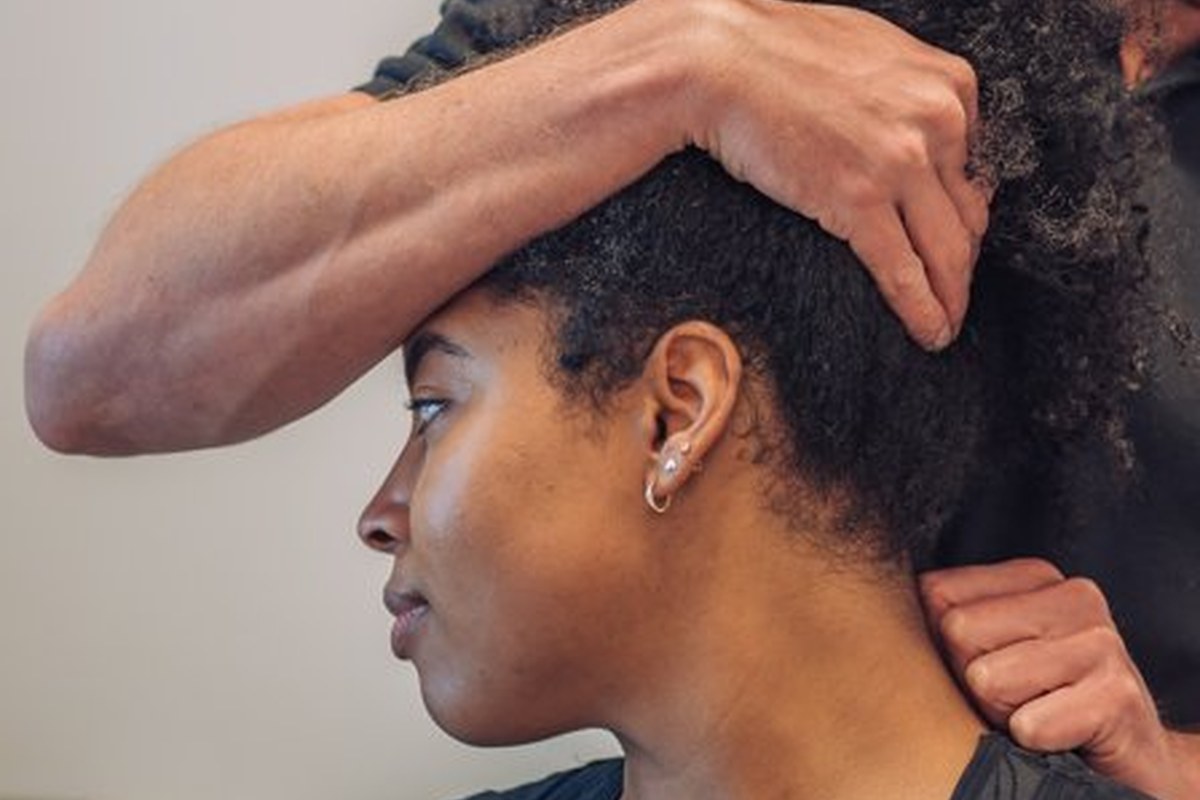
Sometimes the muscles around the shoulder and shoulder blade are still too tense, and that needs treating first. We do this on the treatment table. Once the tissue has been treated, you can produce more strength straight away and the shoulder moves more freely.
Then we teach the body to get all the tissues working together again. Every part has to do its job at the right moment. For example, every time you raise your arm, your shoulder blade should tilt along with it over the upper back. If your upper back stays rounded and your shoulder blade doesn’t tilt properly, there’s less space under the roof of the shoulder. The tendon gets pinched and irritated. You feel the pain in the shoulder, while the cause sits in the upper back and the control of the shoulder blade.
Because the exercise programme teaches the body to share strength and posture evenly through the whole chain again, we tackle the cause of the pain!
The number of sessions depends on the problem. With impingement or bursitis, you can often see results fairly quickly. With a frozen shoulder or a rotator cuff tear, recovery takes longer, because the natural healing process needs more time. A frozen shoulder goes through several phases and lasts one to two years on average, and the right guidance can make the course a lot milder.
Do you want to get rid of your pain? Have a proper assessment of where it comes from? Move better, longer and more easily again? Book an appointment now and come and see us at FysioGrow in Rijswijk, near The Hague! If you’d like more information first, click the WhatsApp icon. I’m happy to answer your questions.
Frequently asked questions about shoulder pain
When should I see a physiotherapist for shoulder pain?
When shoulder pain lasts longer than two weeks, keeps coming back, disturbs your sleep at night, or comes with loss of strength and limited movement. An appointment is also a good idea after a fall or injury to the shoulder. If you suddenly lose a lot of strength in your arm after a fall, see a visible deformity, or have pain with fever and feel generally unwell, go to your GP straight away.
How long does a frozen shoulder last?
A frozen shoulder goes through three phases and lasts one to two years on average. The first, painful phase lasts two to nine months. Then comes the stiff phase of four to twelve months, and finally a recovery phase of six to twelve months. Good physiotherapy guidance can’t speed up the process, but it can make it clearly milder and prevent compensation problems in the neck or upper back.
Does physiotherapy help with a rotator cuff tear?
Yes. For the vast majority of rotator cuff problems, physiotherapy is the first step, including partial tears. With targeted exercise therapy, the surrounding muscles can largely take over the function of the affected tendon. Surgery is only considered if six months of good exercise therapy doesn’t give enough results, or for large acute tears caused by an injury.
What can I do myself about shoulder pain?
Keep moving your arm gently, within what the pain allows. Keeping it completely still often makes the stiffness worse. Avoid repeated movements above shoulder height if they bring on the pain, and adjust your sleeping position for now with a pillow under your upper arm. A heat patch can ease muscle tension around the shoulder. If the pain lasts longer than two weeks, book an appointment.
Is shoulder pain caused by bad posture?
Posture often plays a big role. A rounded upper back and shoulders rolled forward reduce the space under the roof of the shoulder and put ongoing strain on the tendons. Screen work, cycling with a bent back and heavy lifting make this pattern stronger. That’s why good treatment always looks at the whole chain of trunk, upper back and shoulder blade, not just the shoulder itself.
Can I keep doing sport with shoulder pain?
Often you can, but in an adapted form. Sports where your arm keeps going above shoulder height, like tennis, volleyball or CrossFit, can make things worse if there’s underlying impingement or rotator cuff irritation. Walking, cycling and targeted lower-leg work are usually fine. If you’re unsure, we can tell you during the assessment which load is safe and useful right now.
Other common problems
Might also be relevant to you

The solution for your shoulder pain!
Step by step we work towards a lasting pain-free situation. We do this by combining the best hands-on techniques with a tailor-made exercise programme. We also look at changes you can make in your daily life to prevent the pain.