
Hip pain
Hip, groin and thigh pain. Treatment in Rijswijk, near The Hague

Sound familiar?
- Is your hip getting in the way of your daily activities?
- For example, does it hurt to get up from a chair, or is walking difficult?
- Do you feel your hip doesn't have enough room to move?
- Maybe that hip pain makes it hard to play sport?
- Can't you manage to stay pain-free on your own yet?
Could this be done differently?
- Would you like to do your daily activities without pain again?
- Want to play sport completely pain-free again?
- What would it be like to do everything again?
- Want to see results right away?

Zorgkaart Nederland

Really good experience with this physiotherapist. He takes his time with you and listens well. Every visit he asks how it’s going and whether there’s any improvement. Thanks to the exercises I got as homework, I’m now almost rid of the pain. I’d recommend this physiotherapist to everyone!
Written by Daan Lansdorp, physiotherapist and owner of FysioGrow.
Does your hip bother you when you get up from a chair, take the stairs, turn over in bed or after a long walk? Does it hold you back at work, in sport or in the things you love doing most? Imagine being able to move again without thinking about your hip all the time.
I’d like to explain where hip pain can come from and what you can do about it. Read on to find out more!
Symptoms of hip pain
Hip pain can show up in different ways. You’ll read more about that below. Besides the pain itself, you may have these symptoms:
- Pain in the groin, the outside of the hip or the buttock
- Stiffness in the morning or after sitting still for a long time, which eases as you move
- Trouble bending, turning or spreading the leg (putting on socks, getting in and out of the car)
- Pain when taking the stairs or getting up from a low chair
- A snapping, clicking feeling in the hip (‘snapping hip’)
- Pain radiating to the thigh or towards the knee
- Pain when lying on the affected side, especially at night
- Loss of strength or the feeling that the hip ‘gives way’ while walking
Causes of hip pain
Hip pain can have different causes. Think of a sudden wrong movement, long-term overload from sport or work, a fall on the hip, poor loading while walking, or osteoarthritis of the hip joint. All of these causes send a pain signal to the central nervous system.
When the nervous system thinks it sees a problem or damage in the body, it will try to stop the problem from getting bigger. It does this by sending a pain signal. So this pain signal actually has a very good reason!
Instead of ‘numbing’ the signal with a painkiller, we can also look for the cause of the problem. If you tackle that, there’s a good chance the pain will go away for good. Without having to depend on pain medication.
The most common causes of hip pain:
- Hip osteoarthritis (coxarthrosis). Wear of the cartilage in the hip joint, with pain deep in the groin and stiffness that actually eases with movement.
- Trochanteric bursitis. Inflammation of the bursa on the outside of the hip, with sharp pain under pressure and when lying on your side.
- Groin pain in athletes. Ongoing pain in the groin, often in footballers and runners, caused by overload of the adductors or the hip flexors.
- Iliopsoas tendinopathy. Irritation of the large hip flexor, with pain at the front of the groin when lifting the leg.
- Gluteal tendinopathy. Irritation of the buttock muscle tendons on the outside of the hip, often with pain when lying on your side or when running.
- Femoroacetabular impingement (FAI). An unusual shape of the femoral head or hip socket, which makes the joint pinch during certain movements, often with pain when bending deeply or turning.
- Labral injury. A small tear in the cartilage rim of the hip socket, with pain during twisting movements and sometimes a feeling of locking.
- Compensation from the lower back, pelvis or knee. A changed walking pattern due to back pain or knee problems can overload the hip.
There are more possible causes, and we find those out during the assessment. For more general pain you feel elsewhere in the body, you can read more there.
Sometimes the pain stays, even though the body seems to have healed the acute cause. There can be several reasons for this. For example, the body may have developed compensation strategies so you can keep moving. In the longer term, that compensating can actually overload other parts of the body, often the lower back, the knee or the other hip. After a hip episode, muscles can also keep tensing up to protect it. This protective tensing can itself cause stiffness and pain, even when the original cause is long gone.
Stress and tension can also play an indirect role. A high level of tension often raises the tone of the pelvic and hip muscles, which can add to the overload of the tendons around the hip. That’s why we look broadly during the assessment, not just at the joint itself.
Treatment of hip pain
Once we’ve found out what’s causing your pain, we draw up a treatment plan. First we try to get all the muscle tissue, connective tissue and joints working properly again on their own.
Sometimes there’s still too much tension in the hip flexors, the buttock muscles or the connective tissue around the hip, and this needs to be treated first. We do this on the treatment table. Once the tissue has been treated, you can produce more strength straight away and the hip moves more freely.
After that we teach the body to get all the tissues working together well again. Every part has to do its job at the right moment. For example: with every step you take, your buttock muscle has to tense at the right moment to keep your pelvis stable. If that buttock muscle is poorly controlled, your pelvis drops slightly with every step and the hip itself has to provide the stability. Per step that’s harmless, but over tens of thousands of steps a day it becomes constant overload of the hip joint and the outer hip tendons. You feel the pain in or around the hip, while the cause lies in how the buttock muscle is controlled.
Because the exercise programme teaches the body to spread force evenly through the whole chain again, we tackle the cause of the problem!
The number of treatments depends on the problem. With bursitis or an irritation of the hip tendons, results often come fairly quickly. With hip osteoarthritis the cartilage can’t heal, but we can make the pain very manageable by strengthening the muscles around the hip and improving your walking pattern. With FAI or a labral injury, recovery takes longer and depends on how severe it is.
Want to get rid of your pain? Have a proper assessment of where your pain comes from? Move better, longer and more easily again? Book an appointment now and come and see us at FysioGrow in Rijswijk, near The Hague! If you’d like more information first, click the WhatsApp icon. I’m happy to answer your questions.
Frequently asked questions about hip pain
When should I see a physiotherapist for hip pain?
When hip pain lasts longer than two weeks, keeps coming back, disturbs your sleep, or limits your movement in daily activities. Pain that radiates to the groin or thigh is also a good reason to book an appointment. With a sudden major loss of strength, a visible deformity after a fall, or pain with a fever, go straight to your GP.
Does physiotherapy help with hip osteoarthritis?
Yes. Physiotherapy is the first treatment step for hip osteoarthritis according to the KNGF osteoarthritis guideline. Although the cartilage itself doesn’t recover, the pain can ease a lot by strengthening the muscles around the hip, improving your walking pattern and gradually building up load. Because of this, many people can carry on longer and with less pain before surgery becomes necessary.
How long does it take to recover from hip pain?
That varies a lot depending on the cause. Bursitis or tendinopathy often responds clearly to treatment within four to eight weeks. With hip osteoarthritis we work towards lasting good management of the pain rather than a full cure. With a labral injury or FAI, recovery can take six months to a year, sometimes combined with a referral to an orthopaedic surgeon.
What can I do myself about hip pain?
Keep moving, but adjust the load. Avoid activities that clearly make the pain worse, such as climbing lots of stairs or intensive running, but do keep walking, cycling or swimming at an easy pace. When lying on the affected side, a small pillow between your knees can help. If the pain lasts longer than two weeks, book an appointment for an assessment.
Does hip pain always come from the hip?
Not always. Pain on the outside of the hip can also come from the lower back or the SI joint. Groin pain can radiate from the hip joint itself, but also from the groin muscles or even from the abdomen. That’s why during the assessment we always look at the whole chain of back, pelvis, hip and knee.
Can I keep playing sport with hip pain?
Often yes, in an adapted form. Running, sprinting and sports with lots of quick turning movements can make the pain worse with hip osteoarthritis, FAI or a labral injury. Cycling, swimming and targeted strength training are usually fine and even recommended. During the assessment we can tell you which load is safe and useful right now.
With long-lasting hip pain without a clear mechanical cause, the nervous system can play an important role. You can read more about this on our page about tailbone pain.
Other common problems
These may also be relevant to you
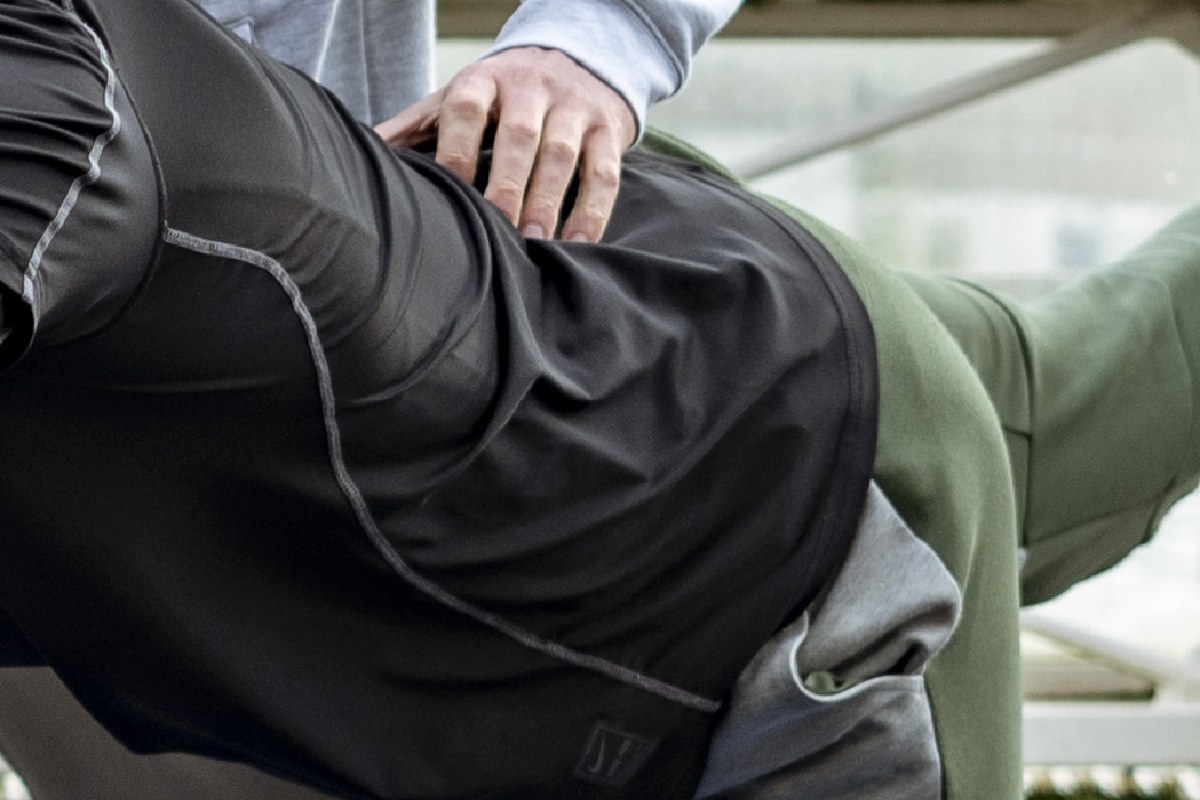


The solution for your hip pain!
Step by step we work towards being pain-free for good. We do this by combining the best hands-on techniques with a personalised exercise programme. We also look at changes you can make in your daily life to prevent the pain.