Written by Daan Lansdorp, physiotherapist and owner of FysioGrow. Specialist in treating tailbone pain with EMCC and NIMOC.
Do you often have pain in your tailbone? For example when sitting or doing ab exercises? Did you know there’s a good chance your tailbone is out of alignment, with all the painful consequences that brings? And more importantly: did you know this problem can be put right fairly easily, without surgery or any other internal procedure?
At FysioGrow in Rijswijk, near The Hague, I treat people with tailbone pain (coccygodynia) every day. On this page I explain how I can realign your tailbone with the EMCC and NIMOC techniques. I also explain where tailbone pain comes from and what the treatment options are.
What is tailbone pain?
Tailbone pain is a problem that can have a huge impact on your quality of life. Fortunately, it can be treated well more and more often these days. On this page I tell you more about the symptoms, causes and effects of tailbone pain, and about the treatments I use to improve it. I try not to throw around too many scientific terms, because I want to keep it accessible for every reader. If you want, you can go through the additional scientific articles in the references at the bottom of this page.
Symptoms: recognising tailbone pain
Tailbone pain (coccygodynia) shows up in different ways. You mainly feel it around the tailbone, at the bottom of your spine. Common symptoms are:
- Pain around the tailbone, especially when sitting for a long time
- Increasing pain when getting up from a chair or sofa
- Tenderness when the tailbone is touched
- Pain when running, cycling, rowing or horse riding
- Pain during sex or bowel movements
- Pain radiating to the lower back, pelvis or buttock muscles
- The feeling of a knot or sore spot on the tailbone
- Pain that gets worse when bending forward or doing ab exercises
If you recognise these symptoms and they last longer than a few weeks, it’s wise to see a physiotherapist. Book an appointment right away or have a look at our other pain problems. The sooner we start, the better the chance of lasting recovery.
Causes of tailbone pain
There are several causes of tailbone pain. The most common cause is an abnormal position or mobility of the tailbone, also called the coccyx. This often happens after a fall or accident, or after giving birth. In most cases this makes the tailbone shift to the left. There are different theories about why the tailbone ends up pointing to the left, but it’s still not really clear.
After a fall, the tailbone can also bend inwards. This is also called a ‘hooked coccyx’. Often there’s a combination of a left shift and a hooked coccyx, together with a rotation to the right.


Other causes of tailbone pain are chronic overload of or pressure on the tailbone. This can come from sitting slumped for long periods, cycling, rowing or horse riding. Obesity can also put too much pressure on the tailbone, which can cause the pain or make it worse.
There are also causes such as wear of the cartilage in the joint with the sacrum (the sacrococcygeal joint), ganglions, tumours and joint inflammation. These causes are a minority and can’t be treated well with manual techniques. That’s why I leave them out of this page.
Effects of tailbone pain
Tailbone pain can have a big impact on your health and quality of life. The main position in which the pain occurs is sitting.
The body sees the misaligned tailbone as a problem. The misalignment puts a lot of tension on the surrounding tissue: the muscles, ligaments and other connective tissue. The tension rises even more when the tailbone presses against the seat of a chair or sofa while you sit. The surrounding nerves send an alarm signal to the pain centre in the brain, which can cause enormous pain.
Because the misalignment often doesn’t go away by itself, it can cause long-lasting irritation. The pain then becomes chronic and the body sometimes becomes even more sensitive to touch of the tissue around the tailbone. It’s like a vicious circle that keeps getting stronger as long as the tailbone stays out of position. Pain can also occur during sex, when getting up from a chair or during sport.
Treatment of tailbone pain
Tailbone pain can be treated in a number of ways. There’s no guideline yet for tailbone pain used by physiotherapists, manual therapists or pelvic floor therapists. But in recent years more and more scientific evidence has been gathered to arrive at an effective treatment for tailbone pain.
Roughly speaking, there are two types of treatment: conservative or surgical.
Conservative means there’s no surgery, and the pain is improved in other ways. The most commonly used treatments for tailbone pain are:
- External Manual Coccyx Correction (EMCC)
- Non Invasive Mobilisation of the Os Coccyx (NIMOC)
- Internal correction
- Exercise therapy or pelvic floor physiotherapy
- Shockwave
- Aids such as a ring cushion
- Pain medication or injections
Surgical means a so-called coccygectomy is performed. In this operation the tailbone is surgically removed. It’s a very drastic operation with a painful recovery. Complications can also occur. In practice, surgery is only an option when all other possibilities have been exhausted.
At FysioGrow I treat clients with tailbone pain using the EMCC and/or NIMOC method. This method often works very well for clients with tailbone pain.
External Manual Coccyx Correction (EMCC) and NIMOC
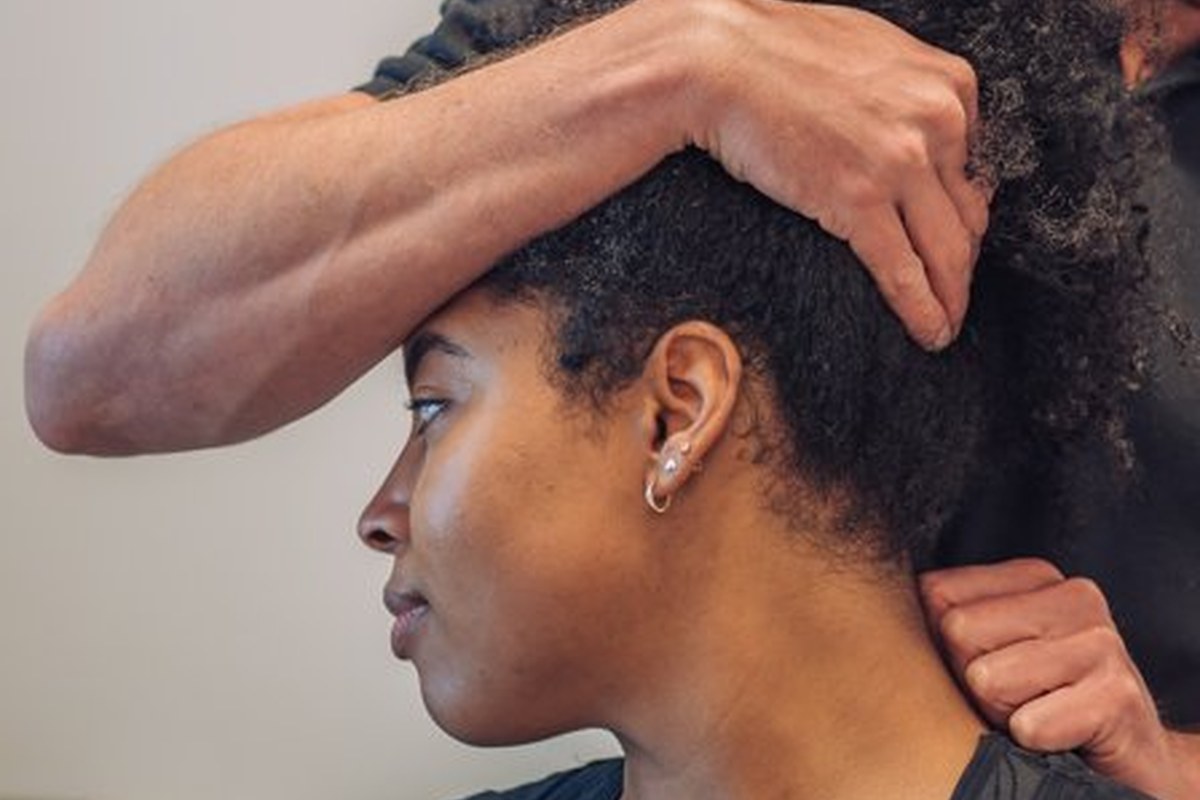
With this technique I straighten the tailbone again with a simple manual movement. First I examine exactly what position the tailbone is in. I do this by feeling where the tip of the tailbone sits. Then I test on which side(s) the pain occurs by pressing gently on and around the tailbone. I also check which muscles, ligaments and joints around the tailbone are under tension and need treatment.
After analysing the tailbone, I move on to the correction. The client sits on the edge of the table and I hold the tailbone between my fingers. Then the upper body is brought into a number of positions and moved in a specific way. Because the tailbone is held in place between the fingers, we can move it back to the right position.
Once the tailbone is straight again, I treat the surrounding muscles, ligaments and joints. These have often been under tension for a long time. The body has to learn to let them relax again. For this I use a number of manual techniques and relaxation exercises. This reprograms the nervous system to get used to the new situation.
The technique can be a bit sensitive, but it is far less invasive than an internal correction, where the tailbone is mobilised through the anus. In practice that isn’t needed at all to get good results in relieving tailbone pain.
As far as I’m concerned, these techniques deserve much more attention, because I see in practice how much relief they bring my clients.
Take action!
Do you have tailbone pain yourself, or do you know someone who does? FysioGrow is based in Rijswijk, near The Hague, but clients travel from all over the country to our practice for EMCC and NIMOC treatment of tailbone pain.
Book an appointment straight away and select Daan Lansdorp as your therapist when booking. He is our tailbone pain specialist. Dealing with other pain? Take a look at our pain page for the full overview.
Any other questions? Get in touch through the WhatsApp button.


Frequently asked questions about tailbone pain
What is tailbone pain and what causes it?
- Tailbone pain, also called coccydynia, is pain around your tailbone (coccyx), at the bottom of your spine. The pain can have different causes, such as a fall, sitting on hard surfaces for a long time, giving birth, infections, or sometimes no clear reason at all.
Can your tailbone hurt without a fall?
- Yes. A fall is a well-known cause, but far from the only one. Tailbone pain can also come from sitting for long periods, especially on a hard chair, from giving birth or from tension in the muscles around the pelvis. Sometimes there is no clear trigger.
Is tailbone pain dangerous?
- Usually not. Tailbone pain is annoying and can last a long time, but it usually has a harmless cause in the small bones, joints or muscles around the coccyx. See your GP first if you have a fever, if the pain is severe after a fall, if you notice blood in your stool, if you feel numb around your buttocks or legs, or if you are losing weight for no clear reason. Then other causes need to be ruled out.
What are the symptoms of tailbone pain?
- Symptoms of tailbone pain are pain and tenderness in the lowest part of your spine, especially when you sit or stand up after sitting for a long time. Sometimes the pain spreads to your lower back or legs.
How is tailbone pain diagnosed?
- A physiotherapist or doctor can make the diagnosis by talking through your symptoms and doing a physical examination. Sometimes imaging, such as an X-ray or MRI, is needed to rule out other causes of the pain.
How can tailbone pain be treated?
- The treatment of tailbone pain depends on the cause and how severe your symptoms are. Possible treatments include physiotherapy, exercises to strengthen the muscles around the tailbone, manual corrections and sometimes medication or injections to relieve the pain. In very severe cases surgery may be considered.
What can I do myself to reduce tailbone pain?
- You can make a few changes to reduce the pain:
- Use a cushion with a cut-out for the tailbone when you sit.
- Take regular breaks from sitting and adjust your sitting posture.
- Do exercises to strengthen the muscles around your pelvis and back.
- A physiotherapist can help you with targeted exercises and advice.
When should I get professional help for my tailbone pain?
- If the pain lasts longer than a few weeks or gets worse, it’s wise to see a physiotherapist or doctor. Chronic tailbone pain can be treated well with specific therapies.
How can physiotherapy help with tailbone pain?
- Physiotherapy can help with targeted exercises, manual corrections and advice on posture. A physiotherapist can also use techniques to ease tension in the surrounding muscles and take pressure off the tailbone.
Is surgery needed for tailbone pain?
- Surgery for tailbone pain is rare and is usually only considered when other treatments haven’t worked and the pain is severe. This can be a coccygectomy, where part of the tailbone is removed.
How long does recovery from tailbone pain take?
- Recovery differs from person to person and depends on the cause and the treatment. Some people feel relief within a few weeks, while with chronic pain it can take months before things improve.
R.A. Stupers (2015). Effect of Manual External Ox Coccygis Correction and Exercise Therapy in Chronic Coccydynia. A Longitudinal Case Series Study. Upgrade Master Physical Therapy Avans.
Other common problems
Might also be relevant for you
Zorgkaart Nederland

Following several visits to other specialists, I came to visit FysioGrow. Besides the extraordinary view, the treatment itself was outstanding. Walking around for several months with severe pain to my tailbone (following an unfortunate “landing”), and the pain seriously disappeared within only three treatments. I would recommend this place to everyone!
Book an appointment
Want to talk to a physiotherapist right away?
Just ask your question on WhatsApp.