
Back pain
Lower back pain, herniated disc and sciatica. Treatment in Rijswijk, near The Hague

Sound familiar?
- Is your back getting in the way of your daily activities?
- For example, does it hurt to lift something off the floor, or is getting up difficult?
- Do you feel your back doesn't have enough room to move?
- Maybe that back pain makes it hard to play sport?
- Can't you manage to stay pain-free on your own yet?
Could this be done differently?
- Would you like to do your daily activities without pain again?
- Want to play sport completely pain-free again?
- What would it be like to do everything again?
- Want to see results right away?

Zorgkaart Nederland

I’ve had problems with my lower back for a few years and went to several different physios for it, but it never really helped. I got in touch with Daan through the gym and he helped me really well. Now I have no complaints at all anymore.
Written by Daan Lansdorp, physiotherapist and owner of FysioGrow.
Does your back bother you during everyday things like bending over, getting up from a chair or a full day at work? Does it hold you back in sport, at work or in the things you love doing most? Imagine being able to move again without thinking about your back all the time.
I’d like to explain where back pain can come from and what you can do about it. Read on to find out more!
Symptoms of back pain
Back pain can show up in different ways. You’ll read more about that below. Besides the pain itself, you may have these symptoms:
- Stiffness in the back, especially in the morning or after sitting for a long time
- Pain radiating towards the buttock, leg or foot (as with sciatica)
- Tingling or a numb feeling in the leg
- Not being able to stand up straight properly or turn freely
- A locked feeling when bending over or straightening up
- Loss of strength in one leg
Pain that sits lower down, around the tailbone or sacrum, is better covered on our page about tailbone pain.
Causes of back pain
Back pain can have different causes. Think of a sudden awkward movement, long-term overload, a weak trunk, a herniated disc, or wear of the intervertebral discs. All of these causes send a pain signal to the central nervous system.
When the nervous system thinks it sees a problem or damage in the body, it will try to stop the problem from getting worse. It does this by sending a pain signal. So this pain signal actually has a very good reason!
Instead of ‘numbing’ the signal with a painkiller, we can also look for the cause of the problem. Because if you deal with that, there’s a good chance the pain goes away for good. Without having to depend on pain medication.
The most common structural causes of back pain:
- Herniated disc (HNP). A bulge in an intervertebral disc that presses on a nerve. Often with pain radiating into the leg.
- Facet joint problems. The small joints at the back of the spine can become irritated, often after an awkward movement or long periods of overextending.
- SI joint or pelvic instability. The joint between the sacrum and the pelvis can work less well, causing pain low in the back and buttock.
- Lumbago. Sudden, severe back pain with muscle spasm after what seems like a small movement.
- Trigger points and muscle tension. A local hardening in a muscle that can send pain to other parts of the back or the leg.
- Posture and workplace strain. Lots of sitting, a poor screen setup or a lot of lifting in an awkward way leads to overload over time.
- Weak core and glute muscles. If the stabilising muscles around the spine don’t do their job, the joints and ligaments take the load.
- Osteoarthritis (spondylosis). Wear of the intervertebral discs or facet joints. Everyone has it to some degree and it doesn’t always cause pain.
There are more possible causes, and we find those out during the assessment. For more general pain you feel elsewhere in the body, you can read more there.
Sometimes the pain stays, even though the body seems to have healed the acute cause. There can be different reasons for this. The body may have developed compensation strategies so you can keep moving. In the longer run, that compensating can actually overload other parts of the body. After a back episode, some muscles may also keep tensing up to protect you. This protective tensing can itself cause stiffness and pain, even when the original cause is long gone. Because we find this out during the assessment, we can treat it well.
When back pain becomes chronic
Back pain that lasts longer than three months often behaves differently from acute back pain. In that case the nervous system can keep sending the pain signal by itself, even when the original problem healed long ago. This is called central sensitisation: the pain system has become more sensitive and reacts more strongly to stimuli that normally wouldn’t hurt.
With chronic back pain, more than just the mechanics of the body is often involved. Long-term stress, bottled-up tension, suppressed emotions and personality traits such as perfectionism, people-pleasing or finding it hard to set boundaries can play a big part in keeping the pain going. This is not a case of “it’s all in your head”. It’s a physiological process in which an overactive nervous system really produces pain through muscle tension, reduced blood flow and hormonal signals. This principle is known as the biopsychosocial model and is supported by the KNGF.
The Mind-Body Syndrome theory, first worked out by Dr John Sarno, describes this mechanism in detail. Low back pain is a classic example of it. Research shows that many people with severe chronic back pain have hardly any structural abnormalities on an MRI. And the other way round, many people with clear “abnormalities” such as bulging discs or mild herniations have no pain at all (as described in a systematic review by Brinjikji et al., 2015). So the pain can’t always be explained by what the scan shows.
For people who fit this profile, we are developing a specific 6-week coaching programme: De Pijncode. This programme doesn’t work on the body. It works on the link between emotions and pain, and on calming the overactive nervous system. During an assessment at FysioGrow we look at the mechanical picture, and we also check whether this profile plays a role in your pain. If it does, we’ll talk together about which route suits you best.
Treatment of back pain
Once we’ve found out what is causing your pain, we put together a treatment plan. Sometimes that’s a physiotherapy course, sometimes a coaching route, and sometimes a combination of both.
With a physiotherapy course, we first try to get the muscle tissue, connective tissue and joints working properly again, each on its own. Sometimes there’s still too much tension in the tissue, and that has to be treated first. We do this on the treatment table. Once the tissue has been treated, you can produce more strength straight away and your mobility improves.
After that, we teach the body to let all the tissues work together well again. Every part has to do its job at the right moment. For example: with every step you take, the load should be absorbed gradually through your foot, knee and hip before it reaches your back. If your glutes don’t tense at the right moment, your lower back has to deal with that shock. Per step that seems harmless, but over tens of thousands of steps a day it becomes constant overload. You feel the pain in your back, while the cause sits higher up in the chain.
Because the exercise programme teaches the body to spread force fairly through the whole chain again, we tackle the cause of the pain!
The number of treatments depends on the problem. With overload and posture problems you can often get results quickly. With a herniated disc or a serious muscle strain, recovery takes longer, because the natural healing process needs more time. And with a chronic picture where the nervous system plays a big role, a coaching route like De Pijncode can actually give results faster than continuing to train the body.
Want to get rid of your pain? Have a proper assessment of where your pain comes from? Move better, longer and more freely again? Book an appointment now and come and see us at FysioGrow in Rijswijk, near The Hague! If you’d like more information first, click the WhatsApp icon. I’m happy to answer your questions.
Frequently asked questions about back pain
When should I see a physiotherapist for back pain?
With acute back pain that doesn’t improve after three to five days, with pain that keeps coming back, or with pain radiating into the leg, tingling or loss of strength. It’s also wise to book an appointment if your back pain limits your daily activities or work. With red flags such as sudden loss of strength in both legs or incontinence, go straight to your GP or the emergency department.
How long does a herniated disc take to heal without surgery?
Most herniated disc problems heal naturally within six to twelve weeks, as long as you get good guidance on movement and load. Physiotherapy helps support recovery, prevent compensation and rebuild strength in the chain. For the vast majority of people, surgery isn’t needed.
Does physiotherapy help with chronic back pain?
Yes, but the approach is different from acute back pain. With chronic pain the focus is less on the body itself and more on calming the nervous system, breaking compensation patterns and, with MBS profiles, the link between stress, emotions and pain. In that case a coaching route like De Pijncode can be more effective than continuing to exercise.
Is back pain always harmful?
No. Pain is a signal from the nervous system, not a direct measure of damage. Many people with severe back pain have few or no abnormalities on an MRI, and the other way round, many people without back pain do have visible wear or bulging discs. Movement is good for almost every type of back pain, even if it feels uncomfortable at first.
What can I do myself about acute back pain?
Keep moving. Lying in bed for a long time usually makes the pain worse. Avoid heavy lifting, change positions often and do calm activities like walking. A warm bath or heat patch can ease muscle tension. If the pain doesn’t ease after a few days, book an appointment.
How many treatments will I need for back pain?
That depends on the situation. With overload or posture problems we often see clear improvement after three to six treatments. With a herniated disc, a serious muscle strain or chronic pain, this can go up to ten or more sessions. During the first assessment we give you a well-founded estimate.
Back pain often doesn’t come on its own. Tension or poor posture puts strain on the whole spine, so you may get neck pain at the same time.
Other common problems
Might also be relevant for you

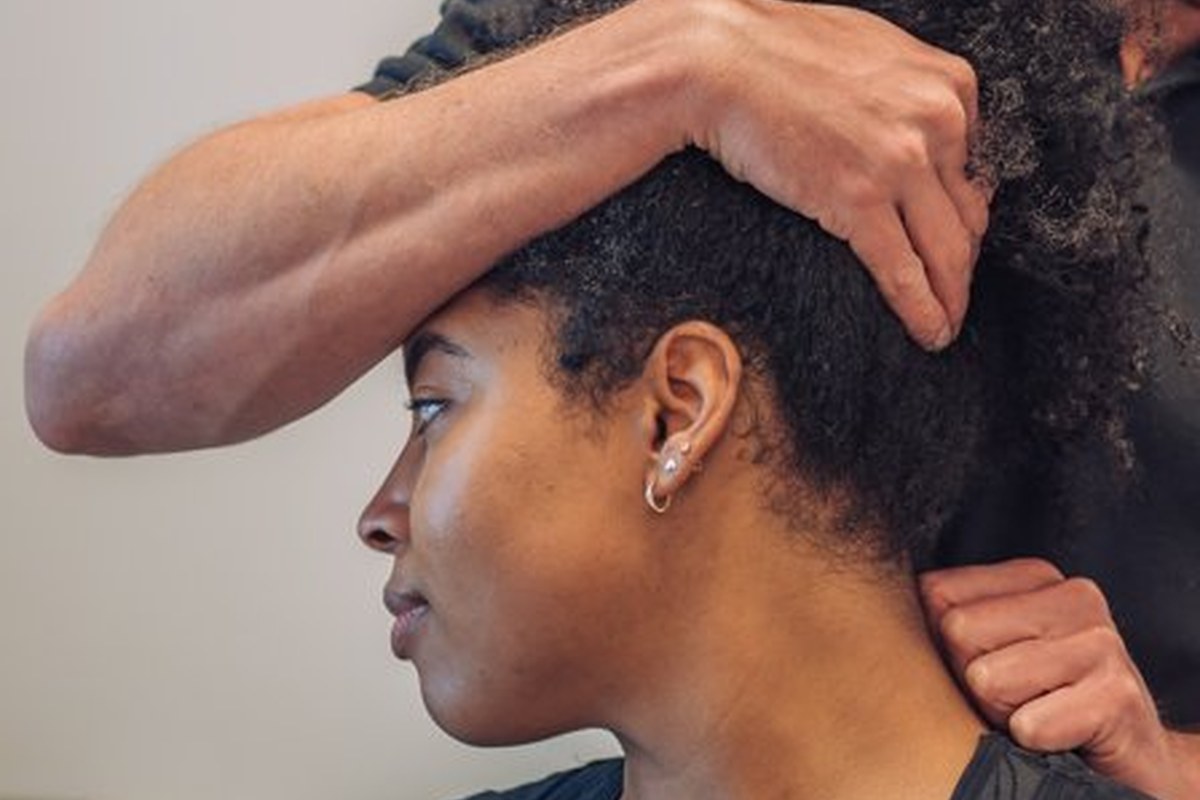

The solution for your back pain!
Step by step we work towards being pain-free for good. We do this by combining the best hands-on techniques with a personalised exercise programme. We also look at changes you can make in your daily life to prevent the pain.